Harshit Bokadia
AI Researcher · Healthcare AI, Robotics & Computational Neuroscience | SUTD · Canadian Citizen
I am an AI researcher and engineer with a track record spanning healthcare AI, computational neuroscience, embodied intelligence, and AI-driven manufacturing, deploying machine learning across high-stakes healthcare, industrial, and research settings, and currently working at the frontier of world model learning. Along the way I've worked directly with clinicians, hospital leadership, government funders, startups, CROs (Contract Research Organizations), and non-profits, translating stakeholder needs into AI systems deployed across manufacturing, neuroscience, and healthcare.
Over the past three years I built medication-recommendation and precision-health pipelines for neurodivergent populations at Holland Bloorview Kids Rehabilitation Hospital, then deployed regulatory-compliant, EHR-integrated ML in production at Waypoint Centre for Mental Health Care. I now bring that same rigor to embodied intelligence research as a Research Associate at SUTD (Singapore University of Technology and Design).
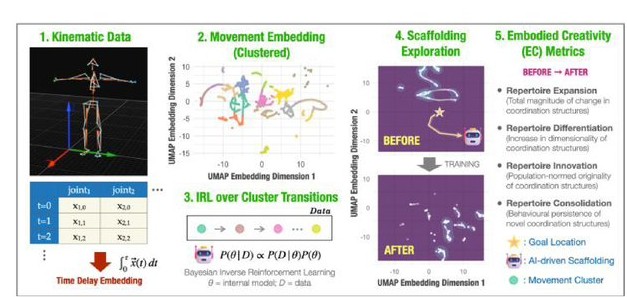
At SUTD, my research builds AI pipelines for real-time estimation of learners' internal world models from motion-capture kinematic data, modelling movement exploration as a Markov Decision Process, running Bayesian inverse RL to recover reward structure and state-transition dynamics, and using inferred world models to scaffold open-ended embodied creativity in real time. This work connects foundational questions in world model learning and generative modelling to the physical, embodied setting.
Career timeline
- 2008–2014BTech, Mechanical Engineering followed by nearly two years as a Project Engineer in Industry 4.0 manufacturing in India, coordinating with contract firms, suppliers/vendors, engineering departments, and DuPont safety teams.
- 2016–2018MS, Industrial and Systems Engineering, Rutgers — depth in optimization, statistics, and systems thinking; thesis on deep learning for semiconductor process control.
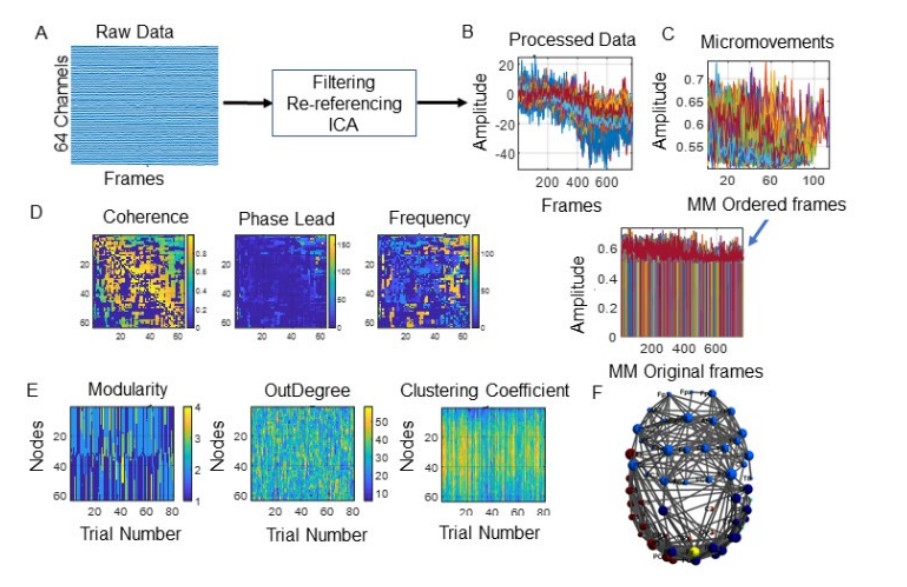
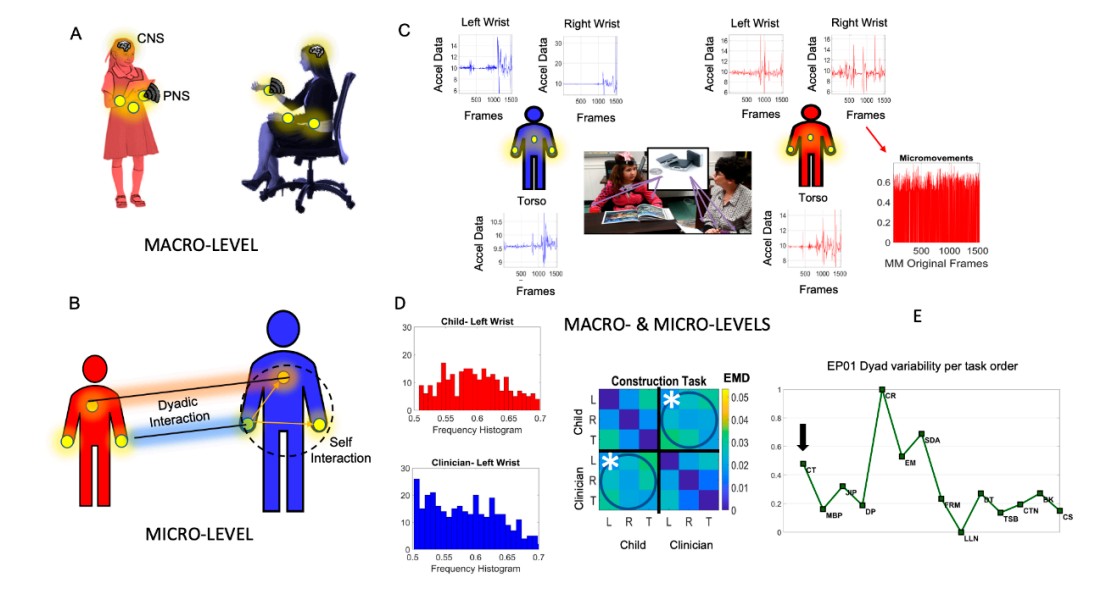
- 2018–2020NJ Startup PartnerComputational neuroscience and cognitive science, Rutgers — electroencephalography (EEG), motor control and sensorimotor integration, Brain-Machine Interfaces (BMI), neural connectivity analysis, and digital biomarkers for autism including the Autism Diagnostic Observation Schedule (ADOS); funded via Rutgers' Office of Technology Commercialization in collaboration with an NJ-based tech startup.
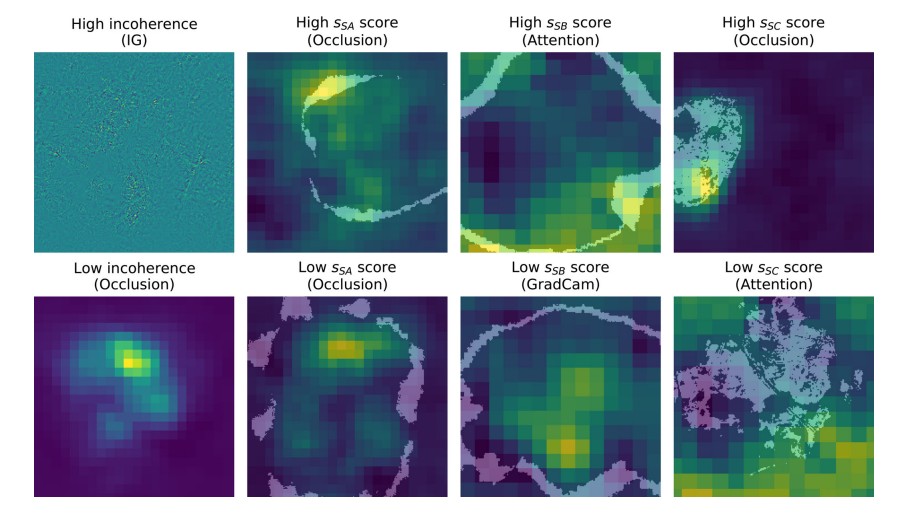
- 2020–2021Government-FundedExplainable AI (XAI) research under DARPA (Defense Advanced Research Projects Agency) / AFRL (Air Force Research Laboratory), Rutgers-Newark — novel perceptual and semantic interpretability metrics for medical imaging.
- 2021NeuroAI Intern, Mila — neural ODE modeling, EEG analysis, and generative modeling of neural dynamics.
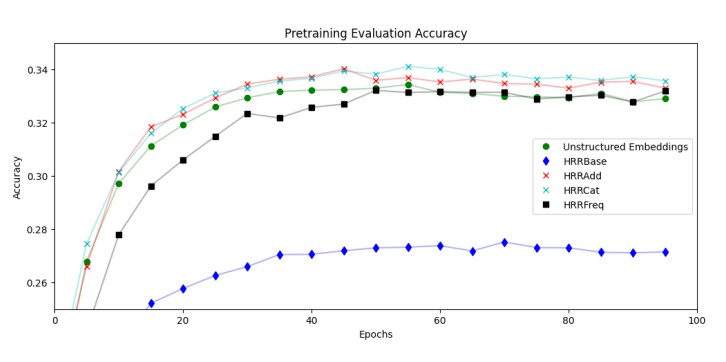
- 2022Toronto Startup PartnerMedical AI group, University of Waterloo — vector-symbolic architectures for structured knowledge encoding in clinical NLP, in collaboration with a Toronto-based health-tech startup.
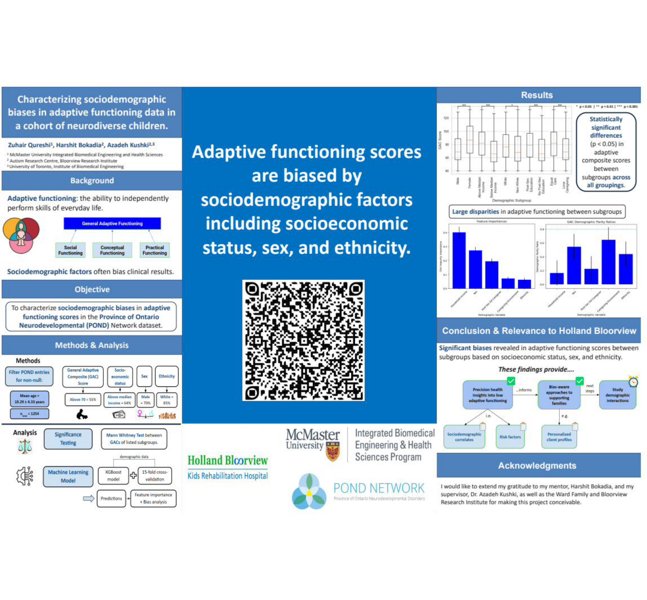
- 2023–2025Research Engineer, Holland Bloorview Kids Rehabilitation Hospital — clinical data science for neurodivergent populations; medication recommendation AI; biosignal processing; large-scale POND (Province of Ontario Neurodevelopmental Disorders) network clinical trial data; collaborated with clinical leadership, non-profits and startups.
- 2025Data Scientist, Waypoint Centre for Mental Health Care — production AI deployment in healthcare; EHR integration via Azure ML; regulatory-compliant ML pipelines; collaborated with clinical leadership, non-profits and startups.
Looking ahead, I want to extend this embodied AI work toward robot learning, robot foundation models, and world model architectures that generalize across tasks and embodiments. My interpretability background also points toward a direction I care about deeply: AI safety and security. Building evaluation frameworks for explanation faithfulness under DARPA/AFRL gave me a concrete foothold in mechanistic interpretability of LLMs, understanding what circuits and features actually encode rather than just what outputs look like, and I want to bring that same rigor to trustworthy, verifiable AI systems.
Research interests
- Embodied AI / Robotics World model learning and representation in agents · robot learning and robot foundation models · model-based RL for generalization under partial observability · inferring latent dynamics from high-dimensional behavioral data
- Clinical AI Precision-health AI deployed in production: medication recommendation modeling for neurodivergent populations · multi-site clinical trial data (POND — Province of Ontario Neurodevelopmental Disorders — Network) · regulatory-compliant, EHR-integrated ML pipelines (Azure ML) · biosignal processing (EEG, accelerometry) and digital biomarkers (ADOS)
- LLMs / MLLMs Post-training (RLHF — Reinforcement Learning from Human Feedback; DPO — Direct Preference Optimization; instruction tuning) · inference efficiency (speculative decoding, vLLM, quantization) · VSA (vector-symbolic architecture)-structured knowledge encoding
- Interpretability Mechanistic interpretability of transformer circuits · feature geometry and superposition in LLMs · evaluation frameworks for explanation faithfulness (background: saliency metrics, semantic overlap, DARPA XAI)